


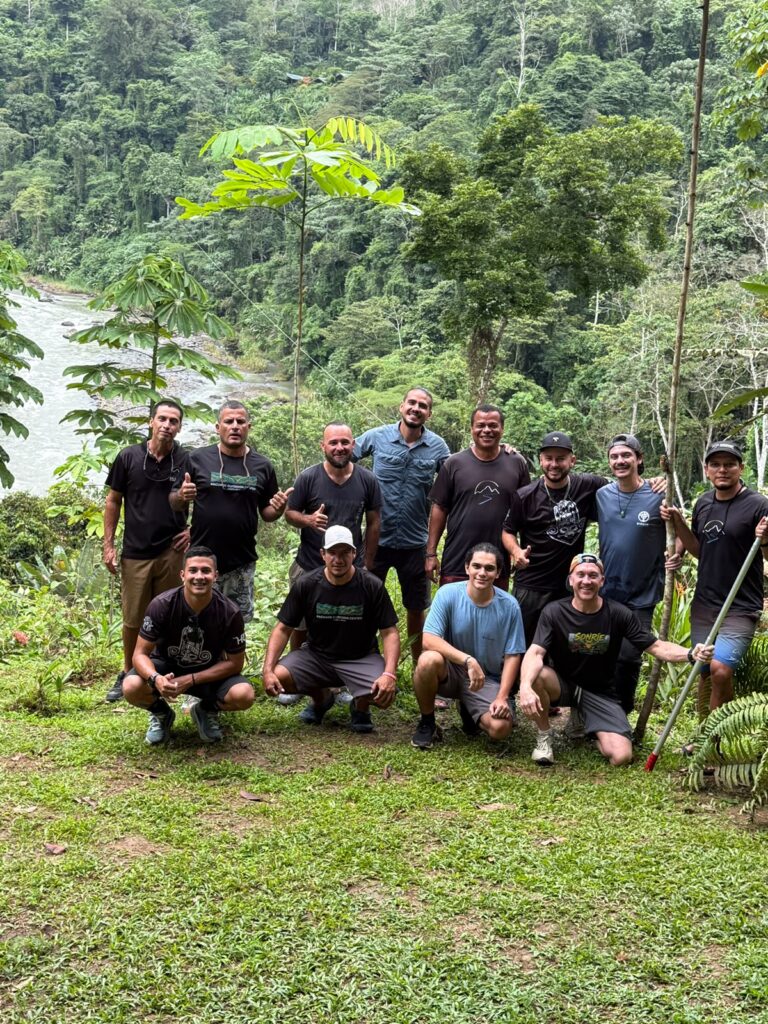
This past week, our guide team traded paddles for headlamps and spent three days doing something a little different: studying insects.
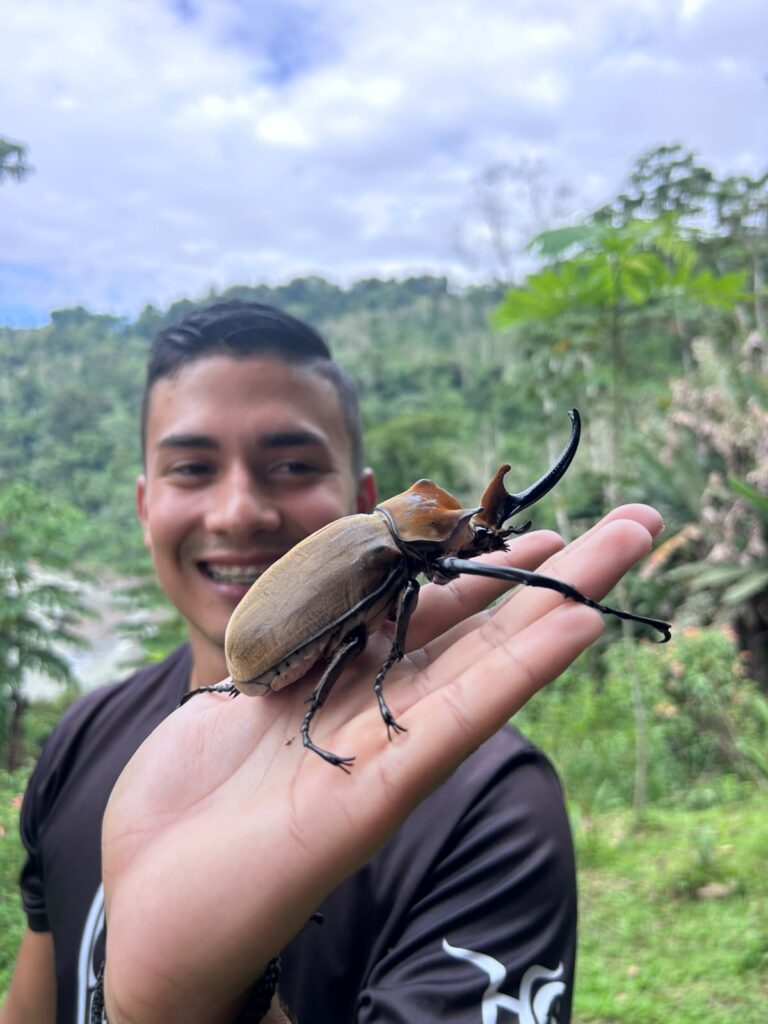
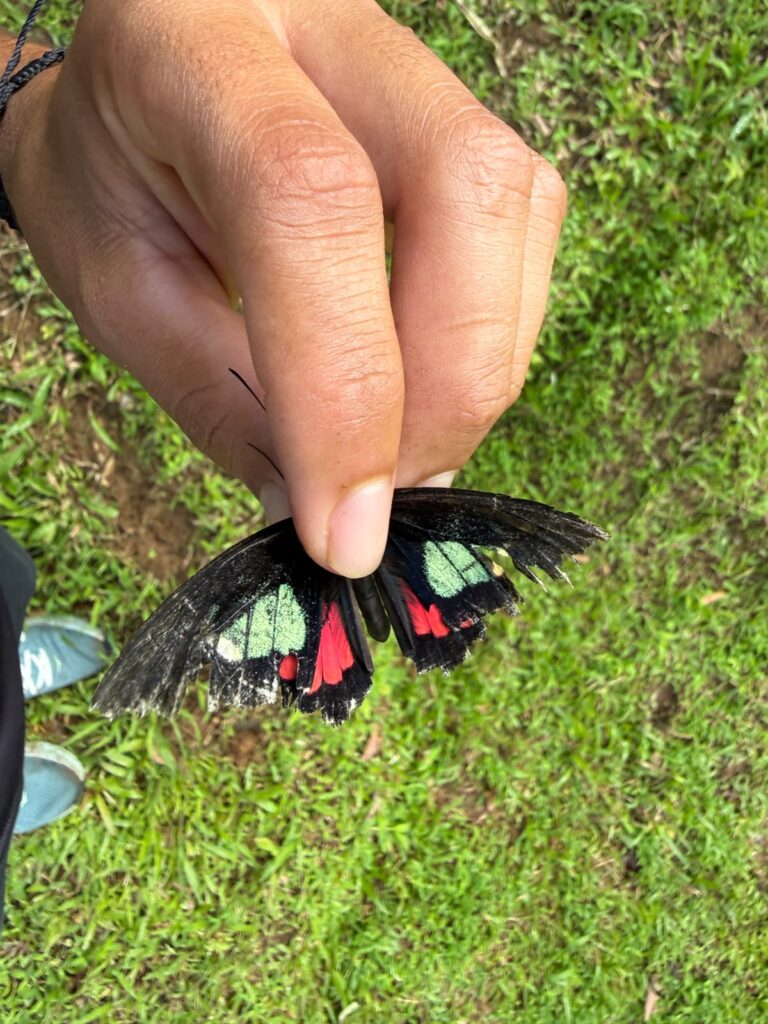
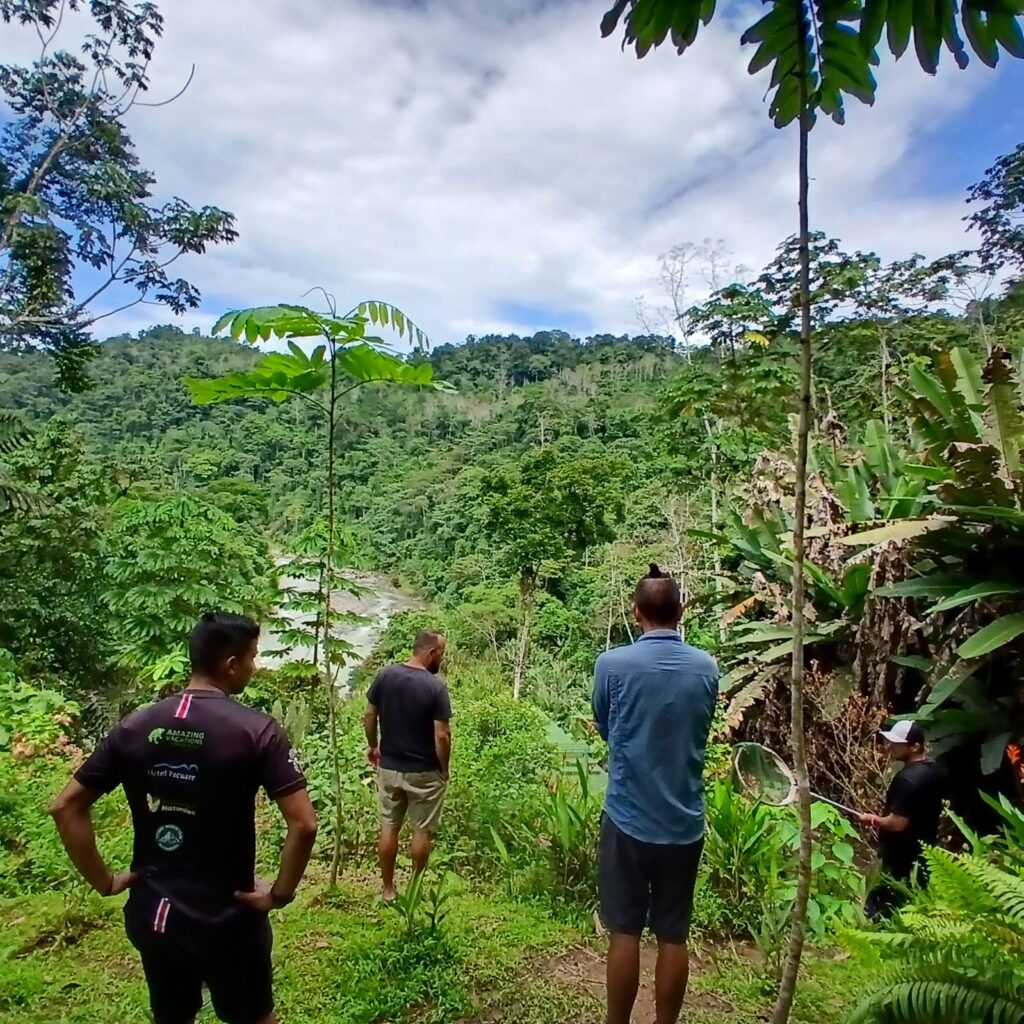
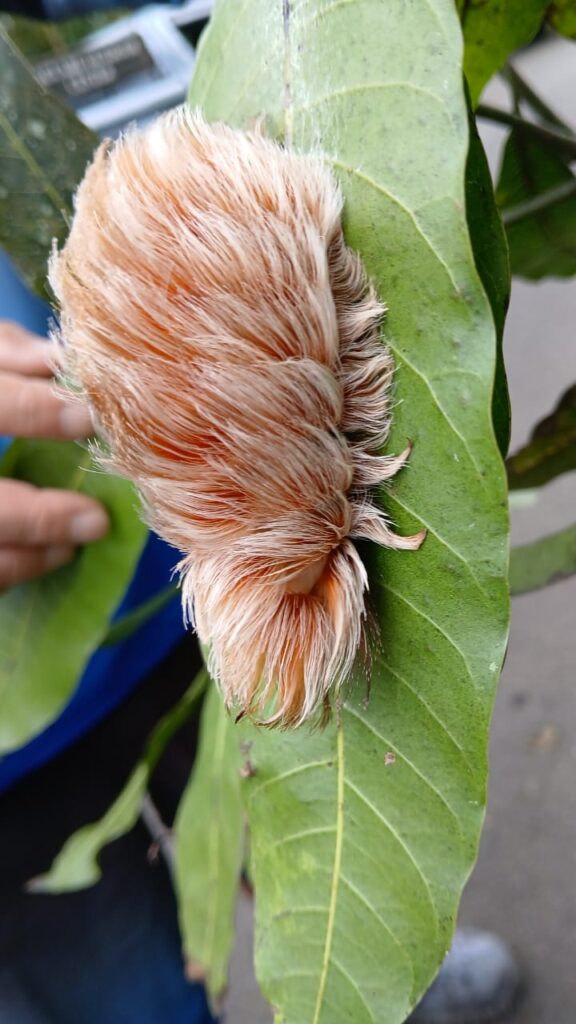
We brought in Jim Cordoba, one of Costa Rica’s most respected field entomologists, to lead a three-day training on the insect life of the Pacuare rainforest. Our guides already know this river and forest better than almost anyone. This was a chance to go deeper, to understand the smaller, stranger, often-overlooked creatures that make up so much of what’s actually living around our trails and Rio Vista Lodge.
Who Is Jim Cordoba
If you spend any time in conservation circles in Costa Rica, Jim’s name comes up a lot. He got his start young, tagging along with researchers from Costa Rica’s National Museum starting at age nine. Since then he’s spent nearly two decades studying biodiversity on the Osa Peninsula, one of the most biologically dense places on the planet. Along the way he’s discovered more than 30 new species of butterflies and beetles, plus a new mammal record for the country. He co-authored the Animals of Costa Rica app, widely considered the most complete wildlife field guide in the country, and he’s contributed to several international documentaries on Costa Rican wildlife.
Jim also founded BioSur Foundation, a nonprofit dedicated to protecting the rainforests of the Osa Peninsula through land conservation, scientific research, and environmental education. He’s the curator of the Insectopia Museum too, a collection of more than 8,000 insect specimens that’s set to become the centerpiece of a new environmental education center on the Osa Peninsula, in partnership with Botánika, Hilton, and Crocodile Bay.
A lot of Jim’s research has tracked how climate change is reshaping the rainforest in real time. He’s noticed some insect species shrinking as the forest loses water, and the timing of when certain butterflies appear has shifted by months over the course of his career. It’s the kind of detail that only comes from decades of paying close attention. As he puts it: “We need nature. Nature doesn’t need us.”
The Bug Attractor
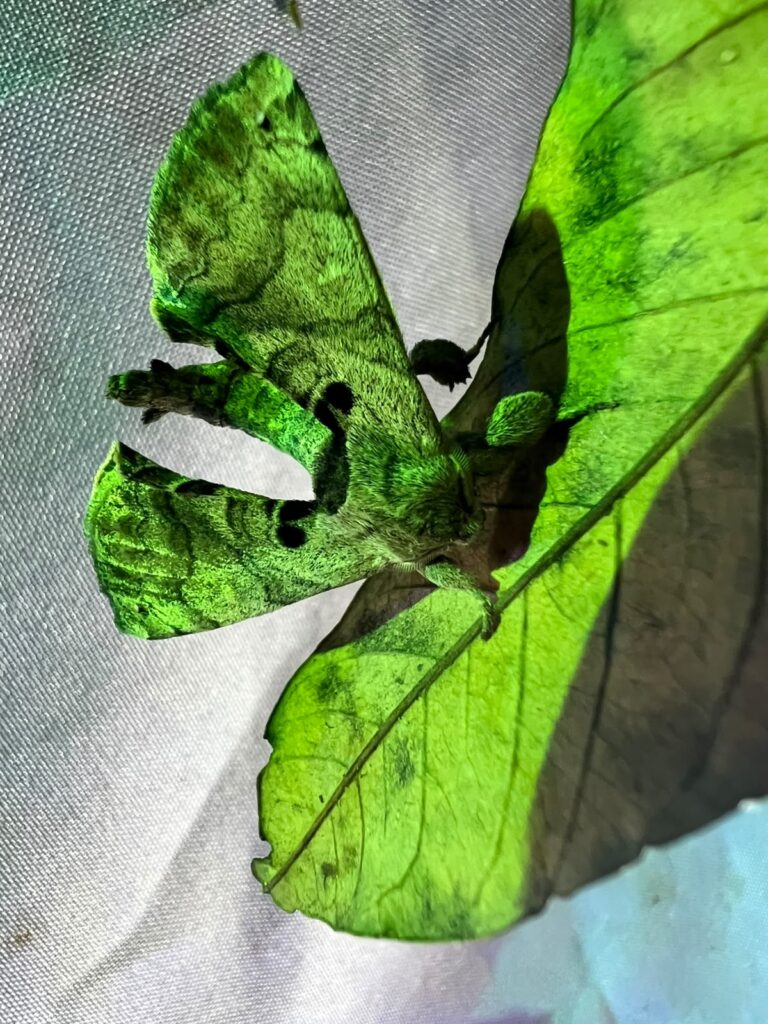
The highlight of the training was something most of our guides had never seen done properly before: a live bug attractor, or light trap, set up right in camp.
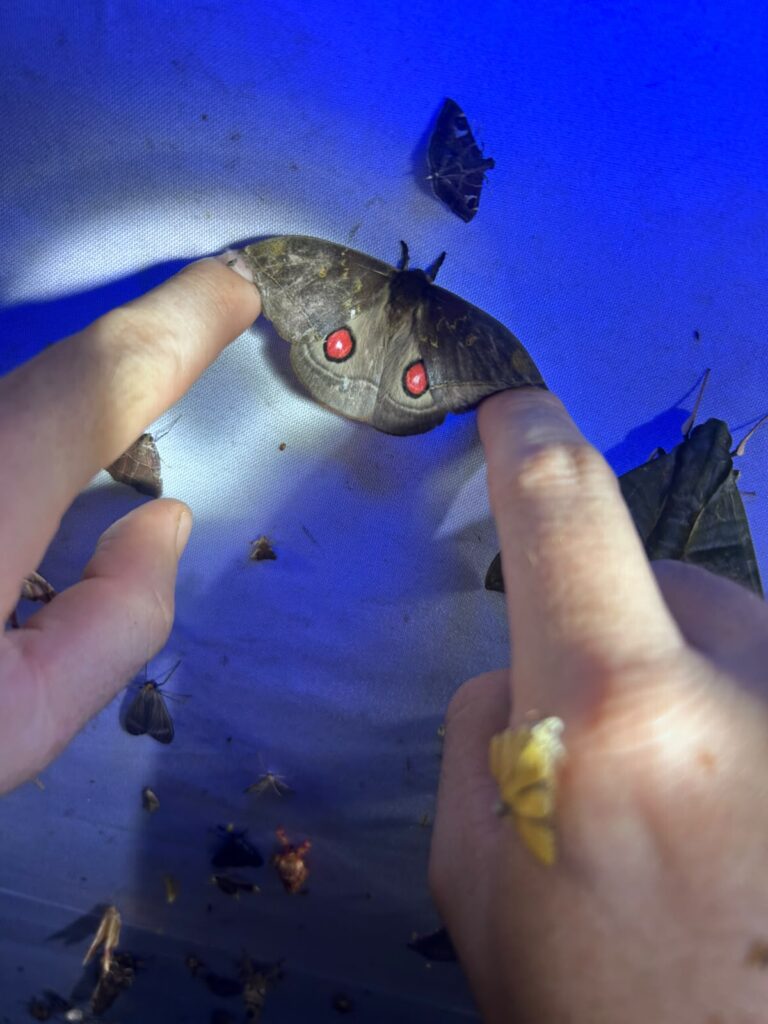
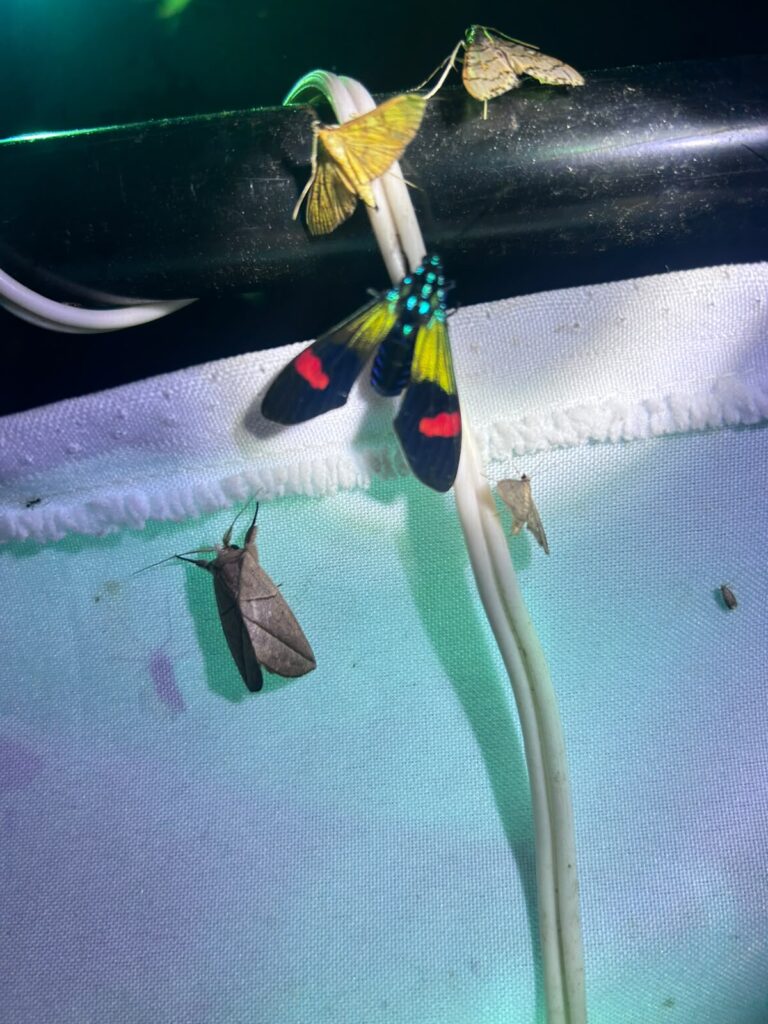
Jim rigged a simple but effective setup, a white sheet lit by both a regular light and a UV blacklight, and within a couple of hours it was covered in activity.
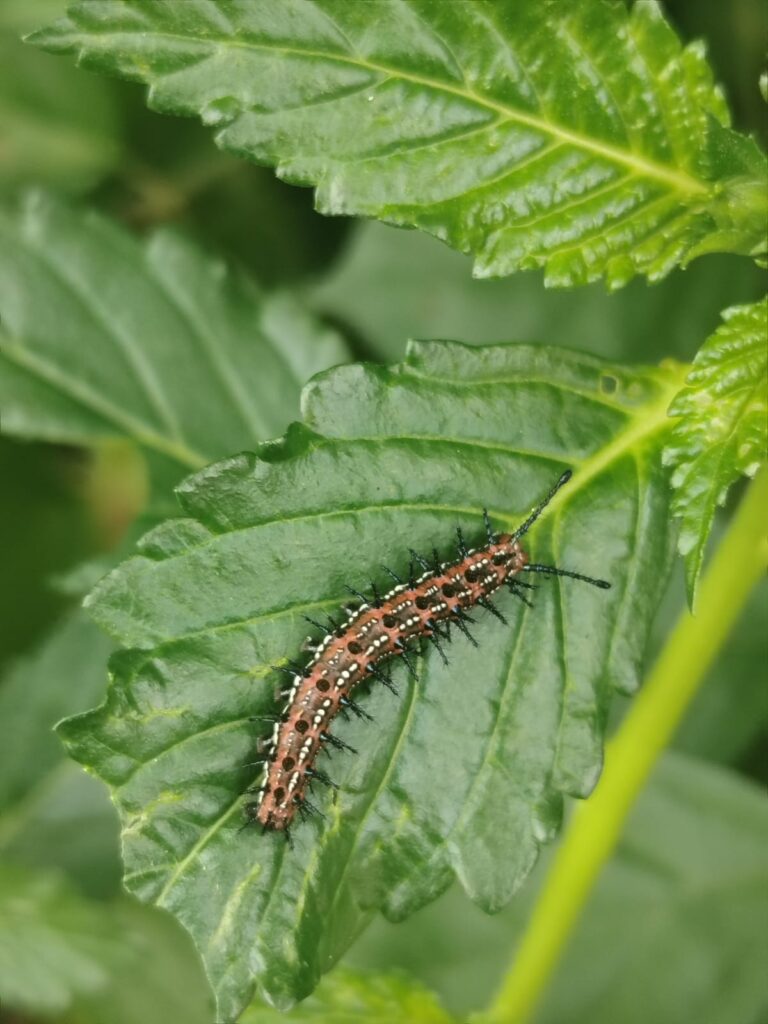
It’s a simple, effective technique. In no time at all, there were more bugs to look at and observe than anywhere else at the lodge.
Why This Matters for Guests
This isn’t just knowledge for its own sake. Our guides are with you for hours at a time on the river and at the lodge, and the more they know about the ecosystem around us, the richer that experience gets for you.
A guide who can point out a leaf-mimic katydid clinging to a branch, explain why a particular beetle only shows up under blacklight, or talk through how a moth’s wing pattern helps it survive is the kind of detail that turns a good trip into a great one. It’s the difference between “there’s a bug on that tree” and understanding the small, intricate systems that make this rainforest what it is.
Looking Ahead
Training like this is part of how we try to do things at Pacuare Outdoor Center. It’s not just about running our two or three day tou, but making sure the people leading them genuinely understand and respect the place we’re lucky enough to work in. Our thanks to Jim and the BioSur Foundation for sharing three days of their expertise with our team.
Next time you’re out on the trail with us, don’t be surprised if your guide points out something six-legged and tells you exactly what it is.
 EN
EN  ES
ES  DE
DE  FR
FR  NL
NL